
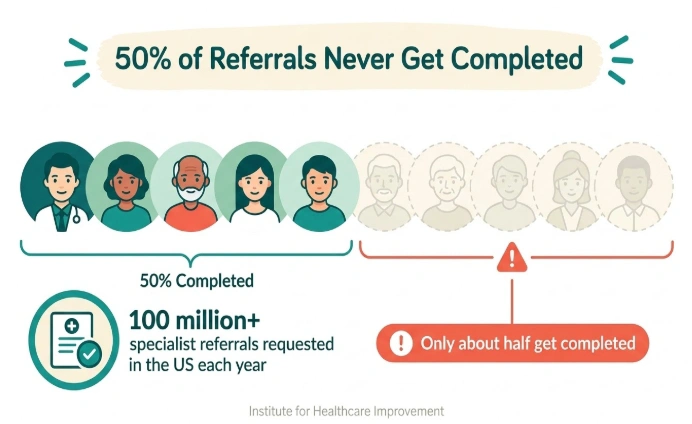
No single doctor can treat everything. That’s why medical referrals exist. A patient with a heart condition, a skin problem, or a back injury that won’t heal needs a specialist, and the first office has to get them there.
This is where things go wrong. Records get lost. Insurance issues hold up approvals. Missing documentation sends a case back and forth for weeks. Patients wait, and some never get seen at all. Here’s what referrals involve, why they stall, and five simple ways to speed them up.
Key Takeaways
- About half of US specialist referrals never get done.
- Missing documentation and insurance issues cause most delays.
- A digital system with real-time dashboards shows where every case stands.
- Automated appointment reminders and scheduling assistance mean fewer no shows.
- Faster care, happier patients, and a less stressed front desk.
What Is Medical Referral?
A physician’s referral of a patient to another specialist is a medical referral when the first consultation cannot provide the necessary care. It involves additional workload for the practice in terms of collecting documents, verifying insurance, scheduling appointments, and communication between the offices.
For example, consider a family practice that issues 20 referrals a week. Of those, five get stuck due to documentation problems or approval delays. About 20 patients a month will wait without any information, and some may never return. This phenomenon is referred to as referral leakage
Who Handles the Referral Process?
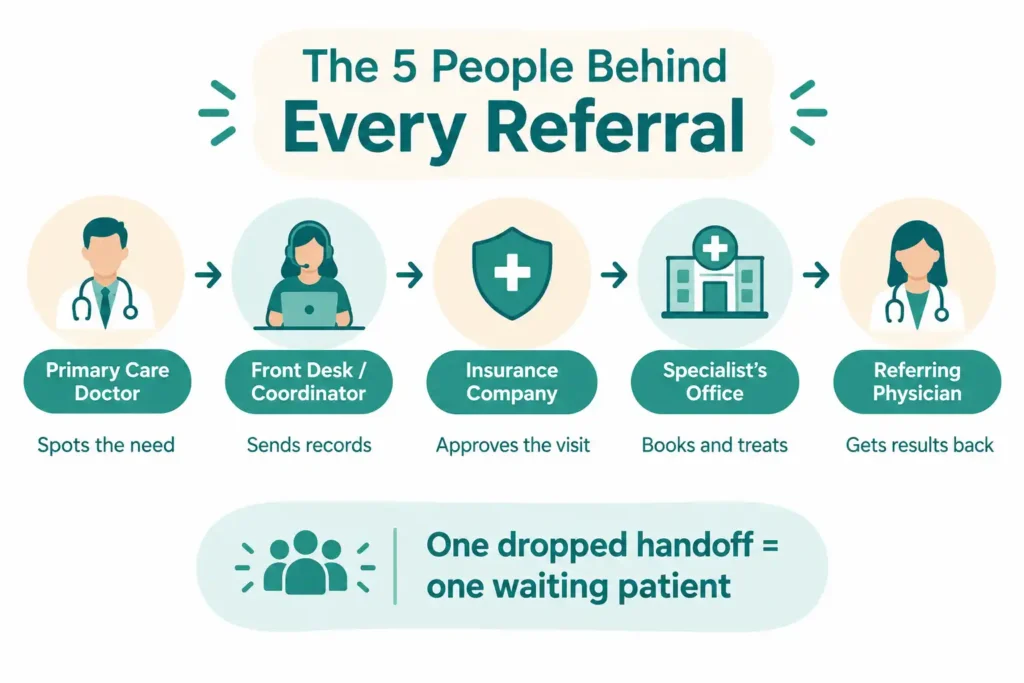
A smooth referral process needs a few people to do their part on time. The doctor decides whether a specialist is needed. The front desk gathers the records and sends the request. The insurance company approves the visit. The specialist’s office books and sees the patient. Then referring physicians need the results back to update the care plan. If one person slips, the patient waits, and the practice spends extra time and money fixing it.
How Does the Medical Referral Process Work?
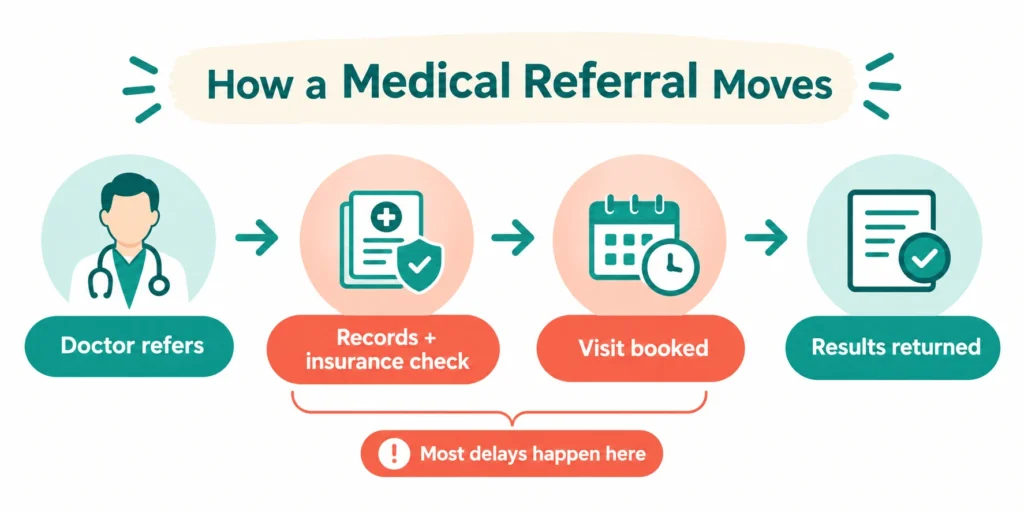
The doctor decides that the patient needs a specialist. The office sends records and checks insurance. Once the insurer approves it, the specialist books the visit. After the visit, the specialist sends the results back to the first doctor. That’s the whole referral process. Sounds easy, right? But most of the waiting happens in the middle, while records and insurance are still being sorted out.
Why Missing Documentation and Insurance Issues Slow Everything Down
Most stuck cases come down to two things.
Missing documentation usually means:
- No recent test results
- No clear reason for the visit
- Old or unfinished notes
- Wrong patient details
When something’s missing, the specialist’s office sends it back. Each time adds days, and the patient has no idea why nobody’s called.
Insurance issues usually mean:
- No prior approval asked for
- Wrong codes on the form
- Coverage that changed or ended
- A specialist who’s out of network
Any one of these can stop a case for a week or more.
How Delays Affect Patients, Staff, and Referring Physicians
The referral problem impacts everyone involved. Patients are left waiting, making repeated calls but never getting an answer. The administrative staff squanders precious time filling out faxes and listening to music on hold, wasting their time. The doctor who referred the patient hears nothing in return, putting a stop to any plans for treatment.
What Is Referral Leakage, and Why Does It Matter?
Referral leakage means a patient never reaches the specialist or ends up with someone outside the practice network. Some get tired of waiting around. Some never get a single callback. Either way, they’re gone, and the practice rarely learns it ever happened.
Each leak is a patient who missed care and revenue the practice can’t recover. The fix is good patient flow management, which simply means every patient keeps moving from one step to the next. Try one habit. Every Friday, pull the referrals older than a week with no visit booked, and call those patients. Nobody needs new software for this. It takes half an hour, and referral leakage drops fast.
5 Practical Ways to Speed Up Medical Referrals
Good news. Most fixes are simple.
1. Move to a Digital System
Paper costs practices time and money. A digital system keeps every case in one place, so managers can see what’s waiting, what’s missing, and what’s done. Choose tools with healthcare interoperability built in, so records reach the specialist without a fax. Budget tight this quarter? A shared tracking sheet beats a stack of faxes sitting on the front desk.
2. Fix Paperwork and Coverage Before Sending
Don’t send anything until it’s complete. Keep a short checklist by the front desk:
- Reason for the visit
- Recent notes and test results
- Insurance checked
- Prior approval asked for, if needed
Ten minutes now can save a week of back and forth later.
3. Track Every Case with Real Time Dashboards
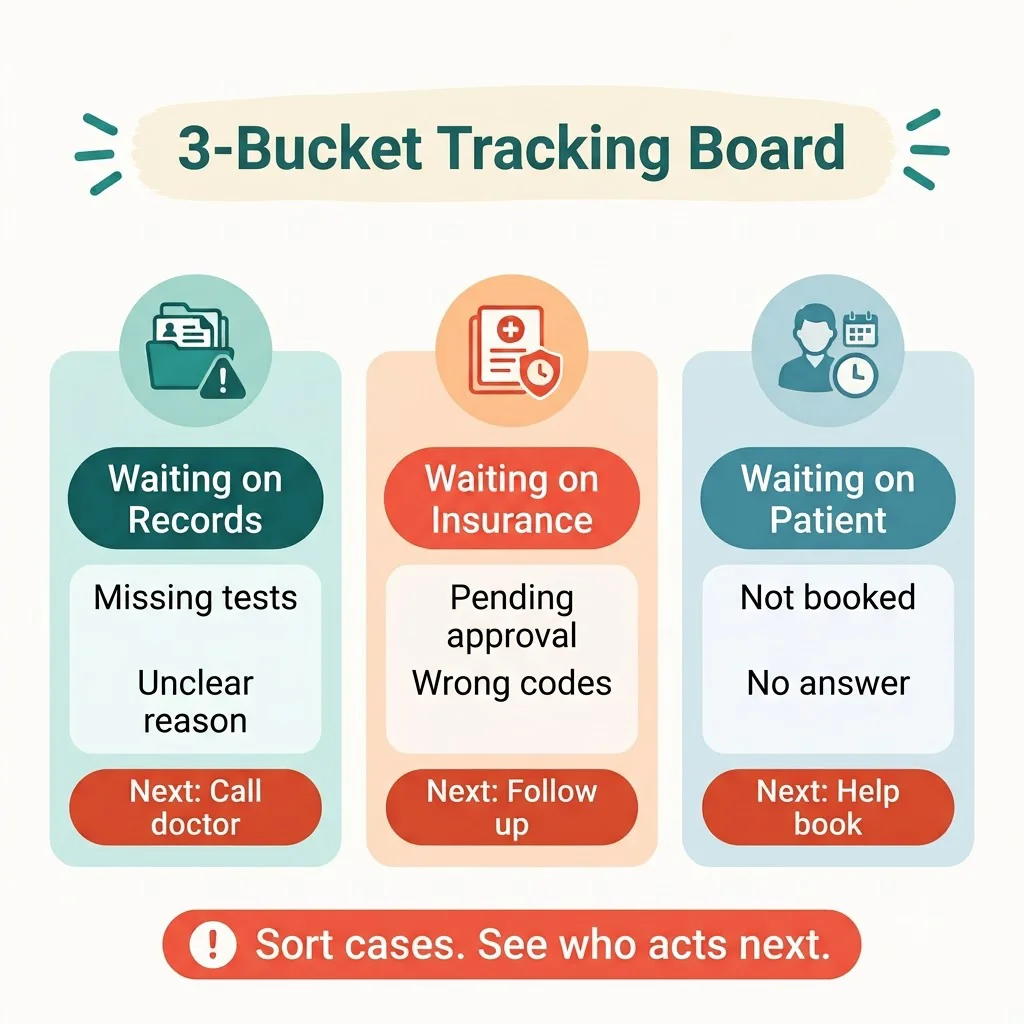
Nobody can fix what they can see. Real-time dashboards show where every case stands. One easy trick: sort open cases into three groups, “waiting records,” “waiting insurance,” and “waiting on the patient.” Then it’s clear who needs to make the next call.
4. Use Automated Appointment Reminders
Automated appointment reminders by text or email mean fewer missed visits and fewer calls for the front desk. Send one a few days before and one the day before. Patients like having the date and address right on their phone, especially when they’re nervous about a new doctor.
5. Offer Scheduling Assistance
Giving patients a phone number and hoping they call rarely works. Scheduling assistance, where staff book the visit with the patient, gets far more referrals done. The best time is before the patient leaves the office, since many referrals come with an expiration date. A quick follow up after the visit also makes sure the results come back.
What Are the Benefits of a Faster Referral Process?
Here’s what changes:
| Before | After |
| Faxes, phone calls, sticky notes | Everything in one digital system |
| Cases sent back for missing records | Records checked before sending |
| Patients wait weeks | Patients get a date and a reminder |
| Staff stuck on hold | Staff help patients |
| Doctors never hear back | Results come back to the right doctor |
It’s also about enhancing patient experience. A booked date, a reminder, and a clear plan. That’s what most patients want. When they get it, they trust the practice and keep coming back.
How Healthcare Interoperability Cuts Referral Delays
Many practices still send patient records by fax. It’s slow, messy, and easy to lose things. Every resent page means more staff time and a longer wait.
Healthcare interoperability fixes that. It just means different offices’ computer systems can share information. When a practice sends a referral, notes and test results go straight into the specialist’s system. There is No fax, retyping or missing pages. Things move faster, fewer cases get sent back, and the front desk has less to deal with. Patients also don’t have to repeat their story at every visit, which goes a long way toward enhancing patient experience.
What We’ve Seen Work
“Most referral problems aren’t about doctors. They happen when nobody takes charge of a case. We’ve seen practices cut wait times just by having one person follow every case from start to finish.
Good software helps. But one clear owner, complete records, and an early insurance check fix more than any tool.”
Yes. Healthcare providers can use digital referral platforms to streamline referral requests, improve patient communication, and connect patients with specialists faster. Clear information about referral requirements, costs, insurance coverage, and eligibility can also improve patient experience.
Real time dashboards show every open case in one place, so staff can spot stalled ones early, like a missing approval or an unbooked visit. They also reveal patterns, like which steps cause the most delays. That way, managers can fix the actual problem instead of guessing.
Yes. Automated appointment reminders by text or email give patients the date, time, and location, so fewer visits get missed. They also spare the front desk dozens of reminder calls a day. Pair them with scheduling assistance, where staff book the visit before the patient leaves, and show rates climb even higher.
Referring physicians get results back sooner and can update care plans without chasing calls or faxes. That builds trust between offices and goes a long way toward enhancing patient experience. It also makes specialists more likely to keep working with the practice.
Send complete records and check insurance before the referral goes out. A digital tracking tool catches stalled cases early, and booking the visit with the patient gets far more referrals completed. Even small changes like these can cut wait times within a few weeks.
Turn Visibility into Growth
Medical referrals should move patients to better care, not park them in a queue.
Five steps fix most of it: go digital, complete the paperwork and insurance check first, track every case, send reminders, and book visits before patients leave.
Most see results within weeks. Short on time? Integrate Point can run the process, so the team stays with patients.