Every year brings a new wave of predictions about what is going to change everything in healthcare marketing. Most of it is noise. Some of it matters enormously. The practices that grow consistently in 2027 will not be the ones that chased every trend. They will be the ones that identified what was actually relevant to their patient base, their market, and their operational reality and invested there deliberately.
Healthcare marketing trends are shifting in real ways right now. AI is changing how patients search for care. Video is changing how practices build trust before the first appointment. Local search is getting more competitive and more nuanced.
This blog breaks down what is worth your attention in 2027 and what you can safely ignore.
Key Takeaways:
- AI healthcare marketing is changing how patients find practices and how practices communicate at scale
- Healthcare marketing SEO is shifting toward conversational search and AI-generated results
- Digital health patient engagement tools are becoming the baseline expectation not a differentiator
- Medical practice marketing that ignores video is leaving significant trust-building opportunity on the table
- Marketing of healthcare services in 2027 requires both technologies.
What Is Actually Changing in Healthcare Marketing Right Now
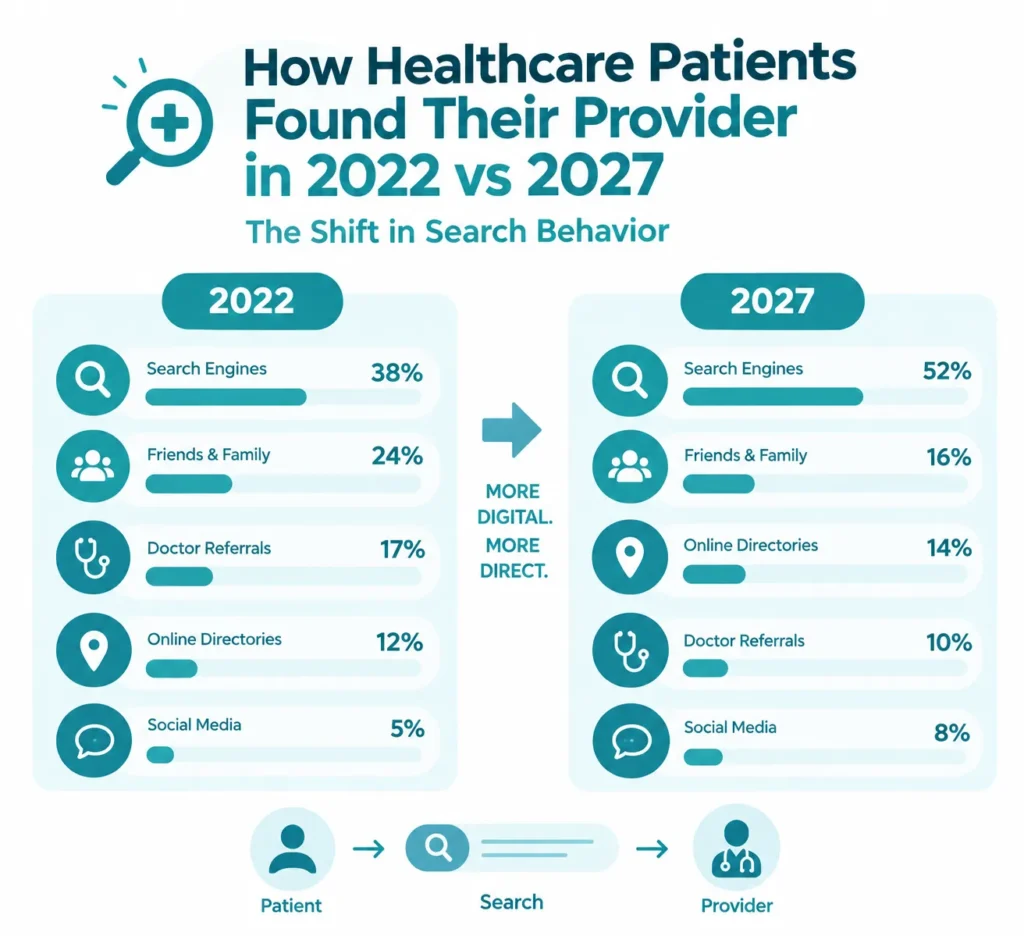
- The biggest shift in healthcare marketing trends right now is not one channel or tactic. It is how patients find, evaluate, and choose a provider.
- Five years ago, a patient searched, checked the top three results, read a few reviews, and called. That process has changed. AI-powered search now answers questions right on the results page. Patients research conditions and form opinions about a practice before they ever visit the website.
- Trends in healthcare reflect this shift. Practices relying on keyword-stuffed pages and a basic Google Business Profile listing are losing ground to those investing in content that answers real questions and infrastructure that makes booking frictionless.
- Health care of the future belongs to practices that build for this shift now, before the gap gets too wide to close.
AI Healthcare Marketing
AI healthcare marketing is one of the most talked about topics right now, and also one of the most misunderstood. The conversation swings between two extremes: AI will replace everything, or it is overhyped and not relevant yet. Neither is true.
Here is what AI actually does for medical practices today. It helps you create content faster without losing accuracy. It shows you which pages and keywords drive patient inquiries and which ones don’t. Chatbots handle after-hours patient questions and appointment requests without your staff lifting a finger. Email sequences personalize themselves based on how a patient interacted with your practice before.
Digital marketing for medical professionals doesn’t need AI to replace the human side of healthcare communication. It needs AI to remove the manual, repetitive tasks slowing down your marketing operation, so your staff can focus on work that needs human judgment.
The practices winning with AI healthcare marketing use it to speed up work they already do well. They don’t use it to replace a strategy they never built in the first place.
Healthcare Marketing SEO in 2027: What Matters Now
Health care marketing SEO is going through a real shift, and every medical practice with a website needs to pay attention.
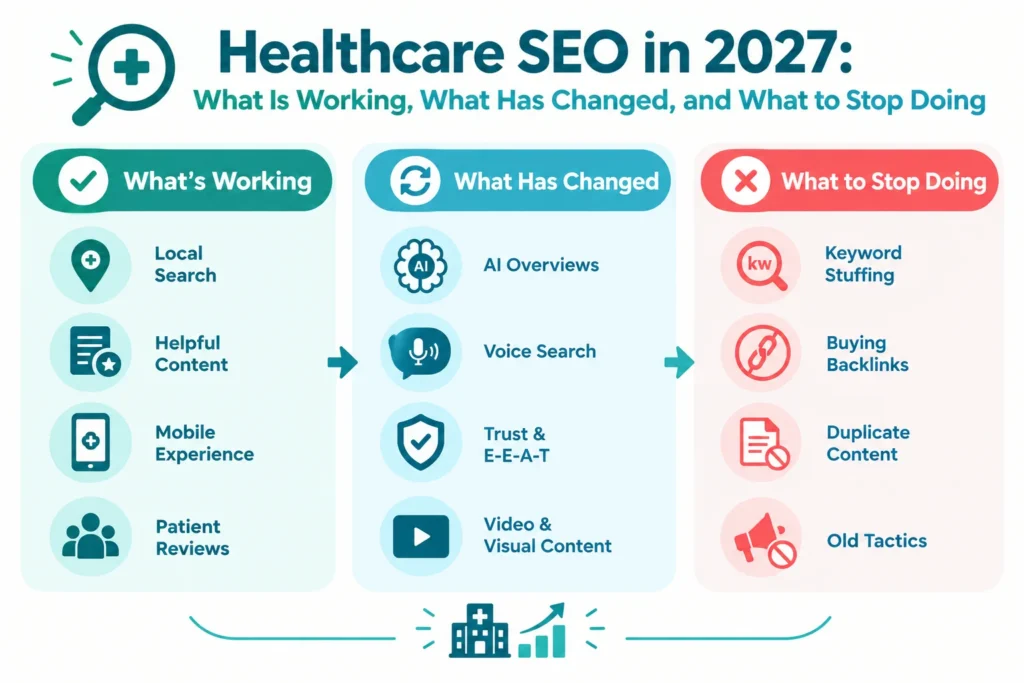
Google’s AI search summaries now answer patient questions right on the results page. Patients don’t even click through anymore. If your SEO strategy was built on basic informational content, you are already feeling the traffic drop.
What works now is content that goes deeper than any AI summary can. Real clinical knowledge, real patient scenarios, and answers to follow-up questions, not just the first one. Patients search the way they talk to a friend who happens to be a doctor, so your content needs to match that conversational tone.
Local SEO still matters more than ever. A strong Google Business Profile, consistent NAP data, and genuine patient reviews with specific service mentions remain the highest-return moves in health care marketing SEO today.
A Practical Thought From Our Healthcare Marketing Team
Research and real-world results suggest, healthcare SEO in 2027 will be less about chasing rankings and more about building a trusted digital footprint: strong local signals, expert content, real patient experience, and information AI systems can verify and confidently cite.
How to Optimize Local SEO for Healthcare in 2027
- Fill out your Google Business Profile with accurate services, categories, hours, and location details
- Create location specific content that answers real patient questions and matches local search intent
- Keep your NAP information consistent across every local directory
- Ask satisfied patients for genuine reviews and respond to them regularly
- Add clear FAQs, structured data, and expert led content to show up in AI search and voice queries
Digital Health Patient Engagement: The New Baseline Expectation
- Digital health patient engagement has moved from a nice-to-have to a baseline expectation
- Patients expect online booking, text confirmations, and reminders without calling your office
- Patients expect to message their provider directly and fill out intake forms digitally before their visit
- Marketing of healthcare services only works if your digital experience matches what patients expect
- Great campaigns bring patients to your website, but a clunky booking process kills the conversion
- Digital health strategies that connect marketing to patient experience infrastructure drive real growth
- Getting a patient to click is step one. What happens next decides if they stay.
Medical Practice Marketing: What to Actually Invest in for 2027
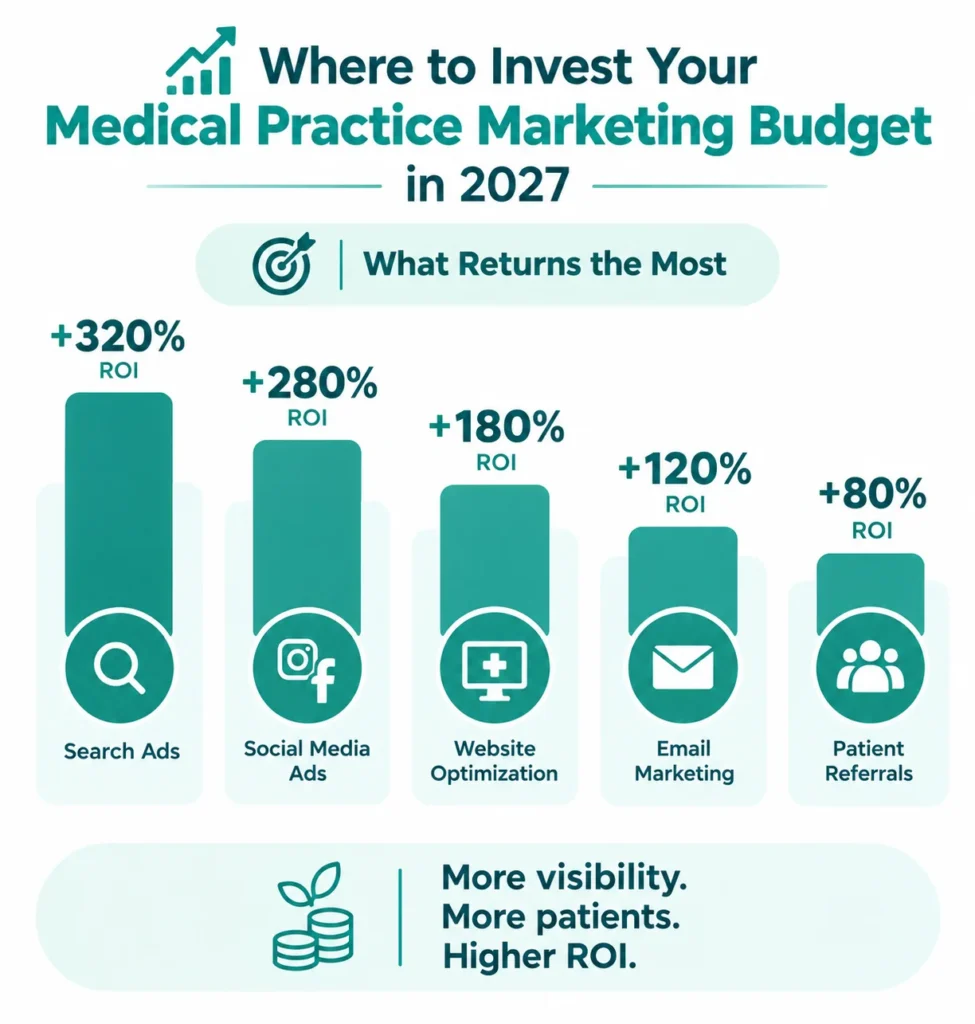
Medical practice marketing that delivers results in 2027 comes down to a few core investments that compound over time, not a long list of scattered tactics.
Video is the highest trust format available right now, and most practices barely use it. A sixty-second video of a physician explaining a common condition or walking through a procedure builds more trust than five pages of written content. Patients who watch a provider on video before their first visit already feel like they know them.
Content marketing stays the most durable SEO and trust investment a practice can make. Two to three years of genuine, specific content pays off every month without ongoing ad spend.
Reputation management is not optional. New patients read your reviews before they call. Medical practice marketing that includes a proactive review system consistently beats practices waiting on spontaneous reviews.
What to Ignore in Healthcare Marketing Trends 2027
Not every trend that gets talked about loudly in healthcare marketing is worth your attention or your budget.
Chasing every new social media platform is one of the most common ways medical practices waste marketing resources. A new platform that is trending among teenagers is not necessarily where your patient base is making healthcare decisions.
Buying backlinks, keyword stuffing, and other outdated SEO tactics are not just ineffective in 2027. They actively harm the domain authority you have built.
Generic AI-generated content published without clinical review or human editing is becoming increasingly visible to both patients and search engines. It reads like it was written by a machine because it was, and it does not build the trust that genuine healthcare content builds. Using AI to accelerate content production is smart. Publishing AI output without meaningful human input is a reputational risk.
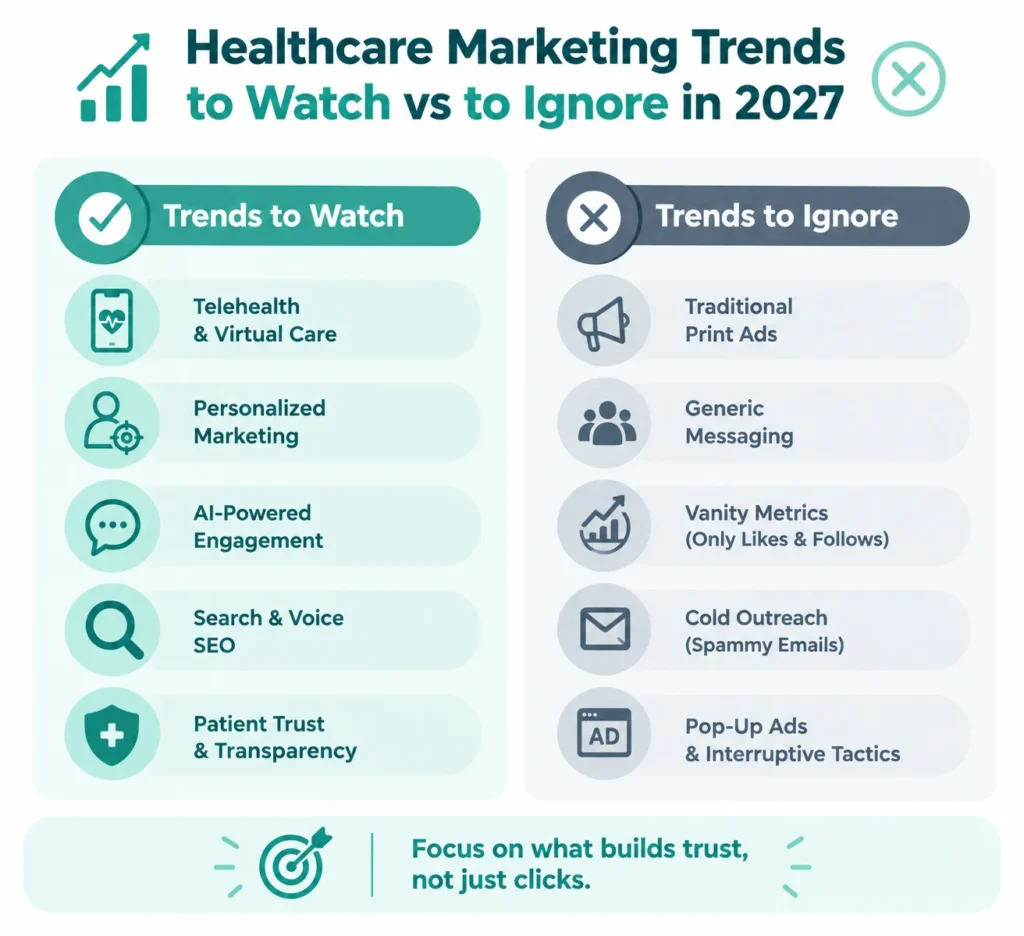
The most important shifts are in how patients search for care. AI healthcare marketing tools, conversational SEO, video content, and digital health patient engagement infrastructure are where the highest-return investments are concentrated right now.
AI healthcare marketing is changing content production speed, patient communication automation, search behavior, and personalization capability. The practices using it well are accelerating work they were already doing.
It means giving patients the digital tools they now expect as standard. Online booking, automated reminders, digital intake, and accessible messaging. Digital health solutions that make the patient experience frictionless are what convert marketing investment into actual retained patients.
Absolutely. Health care marketing SEO has changed in how it works but not in whether it matters. Practices with strong local SEO, genuine content, and well-optimized Google Business Profiles consistently outperform those without in organic patient acquisition.
New social platforms without a clear patient audience fit, generic AI content without human editing, outdated SEO tactics, and any channel that the practice cannot maintain consistently. Trends in healthcare marketing that sound exciting but do not connect to real patient behavior are worth examining carefully before committing budget.
AI speeds up content creation, surfaces which pages drive patient inquiries, powers after-hours chatbots, and personalizes follow-up emails, so your team spends less time on manual work and more on patient care.
Why Choose Integrate Point?
For healthcare businesses, choosing a marketing agency is not just about getting more traffic. You need a team that understands the industry, your patients, and the business behind the website, along with the healthcare marketing trends shaping how patients find and choose providers today.
At Integrate Point, we bring healthcare expertise together with SEO, paid marketing, web development, content, and analytics under one team. Our healthcare focus, compliance-first approach, clear KPI reporting, and US-based delivery make us a practical partner for practices that want marketing connected to real business outcomes, not just rankings.